

Bamboo toilet paper is marketed as the clean, green choice, yet the rolls on offer are not all made the same way, and some earn the label more than others. A pack can say "eco" and "natural" on the front while still being chlorine-bleached, dyed, or wrapped in plastic. If you are switching to bamboo specifically to avoid unnecessary chemicals and waste, knowing what separates a cleaner bamboo toilet paper from one that only looks the part saves you from paying a premium for marketing.
In this guide, you will learn the labels, bleaching terms, and packaging cues that tell you what is actually inside the roll.
Why Not Every Bamboo Roll Is a Cleaner Bamboo Toilet Paper

The word 'bamboo' tells you the raw material, not how the roll was processed. Bamboo is a fast-growing grass, and on paper that makes it a strong renewable alternative to virgin tree pulp. What happens between harvest and finished roll is where brands diverge: some leave the fibre unbleached, others whiten it with chlorine-based processes, and some add dyes or fragrance to match the look and feel of conventional paper.
Those processing choices are the difference between a genuinely cleaner roll and a lightly greenwashed one. A bamboo roll that has been chlorine-bleached, scented, and shrink-wrapped in plastic keeps most of the drawbacks people switch away from. Reading past the front-of-pack claims to the actual sourcing, bleaching, and packaging details is what lets you buy on how the roll is made, not how it is marketed.
What Makes a Cleaner Bamboo Toilet Paper: The Features That Matter
Start with sourcing. Bamboo is renewable only if it is grown and harvested responsibly, so certification is the first thing to check. An FSC certification indicates the raw material is traced to responsibly managed sources rather than habitat cleared to plant a crop. If you want to know exactly what that stamp verifies, the Forest Stewardship Council's explanation of what its certification labels actually verify walks through the different label types and what each one covers.
Next, look at bleaching, because this is where "clean" is most often lost. Bleaching turns naturally beige bamboo pulp white, and the method matters. Elemental chlorine-free (ECF) processing significantly reduces the dioxins associated with older chlorine bleaching but does not eliminate them entirely. Totally chlorine-free (TCF) processing eliminates dioxin formation from bleaching, though it carries higher energy and water use per tonne.
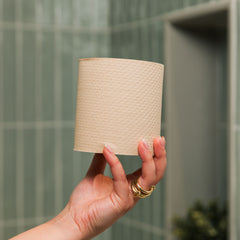
Unbleached paper skips whitening altogether and keeps its natural colour, which is why a beige roll is often a signal that no chlorine whitening was involved. A genuinely cleaner option is our plant paper-based toilet paper: we make it from FSC-certified organic bamboo and leave it unbleached, so there is no chlorine-based whitening step and no need for the dyes that mimic bright-white conventional paper.
Then check what is added and what it is wrapped in. Fragrance and dye are common irritant sources with no hygienic benefit, so fragrance-free and dye-free are worth looking for. Packaging is the final tell: plastic-free wrapping in recycled or compostable paper with vegetable-based inks keeps the impact low all the way to your bathroom, while a plastic outer wrap undercuts much of the point of switching. Reading those four things, sourcing, bleaching, additives, and packaging, gives you a reliable filter for any bamboo brand.
How to Read a Bamboo Toilet Paper Label Without Guessing
Marketing language is designed to reassure, so treat the front of the pack as a headline and the back as the real information. "Natural" and "eco-friendly" are not regulated claims and can appear on rolls that are still bleached and plastic-wrapped. The specifics you want are concrete: a named certification, a stated bleaching method or an unbleached label, an explicit fragrance-free and dye-free note, and a description of the packaging material.
When a brand is transparent, those details are easy to find, and transparency itself is a good sign. When they are vague, that vagueness usually hides a compromise. A roll that clearly states FSC-certified bamboo, unbleached, fragrance-free, and plastic-free packaging has given you everything you need to judge it, without you having to take the word "clean" on faith.
Production Location Matters
Where a roll is manufactured decides which rules the mill behind it has to answer to. Most commercial bamboo is grown in China, and the large majority of bamboo toilet paper is pulped and manufactured there as well. How strictly pollution controls are applied there varies considerably by region and by mill, with less of the independent, facility-level verification that European law requires.
The European Union runs some of the strictest environmental regulation in the world: paper mills must hold permits under the EU Emissions Trading System, which prices and independently verifies every tonne of carbon a facility emits, and what mills discharge into waterways is governed by EU-wide industrial emissions law.
We make our plant paper-based toilet paper in Spain, in a mill on the banks of the river Fluvià that has been making paper since 1881. It was the world's first B Corp certified paper manufacturer, runs entirely on renewable energy from solar, biomass, and biomethane, uses roughly one cubic metre of water per tonne of paper against a sector average near 5.5, and returns its treated water to the river in condition equal to or better than when it was drawn.
Better for You. Better for the Planet.
Organic bamboo toilet paper designed to be gentle on your skin and kind to the earth.
- ✔ No Bleach, Toxins, or PFAS
- ✔ Naturally Hypoallergenic & Fragrance-Free
- ✔ Sustainable Everyday Comfort

A Genuinely Cleaner Roll for Your Routine
If you are looking for a bamboo roll that holds up to a close read of the label, we make our plant paper-based toilet paper from FSC-certified organic bamboo, leave it unbleached, and keep it free from added dyes and fragrance.
Our paper is made in a Spanish mill that has been making paper since 1881, now the world's first B Corp certified paper manufacturer, running entirely on renewable energy and returning its treated water to the local river. It arrives in plastic-free packaging, so the clean choice holds from sourcing through to your shelf. It suits shoppers switching for a lower chemical load and those who simply want packaging that composts with the box. You can compare it against the wider plant-based, plastic-free hygiene range we make.


