

Two rolls of toilet paper can sit side by side on a shelf and look almost identical, yet one may have taken several times more water and energy to produce than the other. Most of that difference is decided long before the roll reaches the shelf, in choices about raw material, bleaching, and how much water a mill recycles. For anyone trying to lower the environmental footprint of an everyday purchase, toilet paper water usage is a useful place to look, because small daily products add up across a year.
In this guide, you will learn which production steps use the most water and energy, why estimates vary so widely, and what to look for if you want a lower-impact roll.
Why Toilet Paper Water Usage Matters for Everyday Shoppers
Toilet paper is bought and flushed without much thought, which is exactly why its production footprint tends to go unexamined. Making paper from raw fibre is water-intensive at several stages: pulping the fibre, washing it, bleaching it, and forming the sheet all draw on freshwater. Estimates for the water behind a single conventional roll range widely, from a few gallons when only the water a mill uses directly is counted, to several times that once the full upstream water footprint of growing and harvesting the raw material is included.
That range is the point worth sitting with. A single headline figure describes one accounting method, and modern mills recycle a large share of their process water, which lowers the net freshwater they withdraw. What stays consistent across estimates is the relative picture: virgin tree pulp is generally more resource-hungry than fast-growing alternatives, and heavy chemical bleaching adds water and energy on top of the base process. Understanding where the water goes makes it easier to tell a genuinely lower-impact roll from one that only looks the part.
Which Production Steps Drive Toilet Paper Water Usage Up?
![water usage concept image - water flowing from large drain pipe into body of water]](https://cdn.shopify.com/s/files/1/0828/8917/9456/files/water_rushing_out_of_pipe_in_rocks.jpg?v=1784570293)
The single largest lever is the raw material. Conventional toilet paper is made from virgin wood pulp, which means trees are harvested, chipped, and cooked into pulp before any paper exists. Bamboo, by contrast, is a fast-growing grass that regenerates from the same root system after cutting, so it reaches harvest in a few years rather than the decades hardwoods take. Less time and less land pressure per unit of fibre generally translates into a lighter resource load at the growing stage.
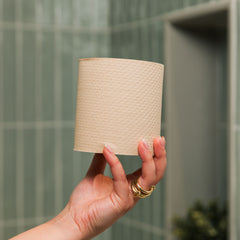
Bleaching is the second major driver. Turning brown pulp bright white takes chemicals, water to carry and rinse them, and energy to run the process. The whiter and softer a conventional roll is engineered to be, the more processing usually sits behind it. A roll left unbleached skips that entire whitening stage, which is part of why unbleached paper keeps its natural beige colour. If you want a genuinely lower-processing option, our plant paper-based toilet paper is made from FSC-certified organic bamboo and left unbleached, so it never goes through the chlorine-based whitening step that adds water and energy to conventional production.
The third factor is what happens to the water afterward. Mills that treat and recycle process water, and that meet discharge standards for what leaves the plant, have a very different real-world footprint from those that do not. The water that pulp and paper mills release is regulated: the EPA's effluent guidelines for the pulp, paper, and paperboard industry set technology-based limits on what mills can discharge into waterways and fold those limits into their discharge permits. Regulation does not erase a product's water usage, but it shapes how much of that water is treated before it returns to the environment.
This is where manufacturing choices show up concretely. The Spanish mill that makes our plant paper-based toilet paper runs closed-loop water recirculation and uses roughly one cubic metre of water per tonne of paper, against a sector average near 5.5, then returns its treated water to the local river in condition equal to or better than when it was drawn.
Why the Numbers Are So Hard to Pin Down

If you search for how much water a roll of toilet paper takes, you will find figures that disagree by an order of magnitude, and that is not because someone is wrong. A water footprint can be measured narrowly, counting only the water a mill actively uses, or broadly, counting everything upstream including the water tied to growing the raw material and generating the energy. The same roll can be described accurately with very different numbers depending on which boundary is drawn.
For a shopper, the practical takeaway is to compare on principles rather than on a single headline gallon count. A roll made from a fast-regenerating raw material, left unbleached, and produced at a mill that recirculates its process water and returns it treated will tend to sit at the lower end of any fair accounting. A bright-white roll from virgin pulp with heavy bleaching will tend to sit at the higher end. The exact figure matters less than the direction the choices push it.
Better for You. Better for the Planet.
Organic bamboo toilet paper designed to be gentle on your skin and kind to the earth.
- ✔ No Bleach, Toxins, or PFAS
- ✔ Naturally Hypoallergenic & Fragrance-Free
- ✔ Sustainable Everyday Comfort

A Lower-Impact Choice for Your Bathroom Shelf
If you want to lower the footprint of a product you buy on repeat, we make our plant paper-based toilet paper from FSC-certified organic bamboo and leave it unbleached, so it skips the chlorine-based whitening step that adds water and energy to conventional production. It arrives in plastic-free packaging, which keeps the impact low from mill to bathroom. We designed it for households trying to cut everyday resource use and for anyone who prefers a simpler, less-processed roll. You can see how the rest of our plant-based, plastic-free hygiene range fits together.


