

A low-toxin lifestyle usually starts with the obvious targets, cleaning sprays, cookware, skincare, and stops before it reaches the bathroom shelf. Toilet paper rarely makes the first list, yet it is a product that contacts sensitive skin every day and gets bought on repeat, which is exactly the profile of a swap worth examining. Choosing a low toxin lifestyle toilet paper is one of the simpler changes to make, and it slots neatly into a wider effort to reduce everyday chemical exposure without overhauling your whole routine.
In this guide, you will learn what actually matters on a roll and where it fits alongside the other swaps people make.
Why Toilet Paper Belongs on the Low-Toxin List

The logic behind low-toxin living is cumulative exposure: any single product may be a minor source, but the total across dozens of daily-use items is what people aim to bring down. Toilet paper fits that thinking well. It is used multiple times a day, it contacts delicate skin, and conventional versions can carry processing residues that a plainer roll simply does not have. That makes it a low-effort, high-frequency swap rather than a dramatic one.
People arrive at this from different directions. Some are eco-minded and focused on packaging and sourcing. Others have sensitive skin and are chasing down irritants. And some begin re-evaluating everyday exposures after a health diagnosis prompts a wider rethink of what they bring into the home. Whatever the starting point, the appeal of a toilet paper swap is that it is easy to make once and then forget, which is what keeps a low-toxin routine sustainable rather than exhausting.
Note: This post is intended for general informational purposes only and does not constitute medical advice. If you are experiencing persistent or worsening symptoms, or making changes as part of managing a health condition, please consult a qualified healthcare provider.
What to Look For in a Low Toxin Lifestyle Toilet Paper

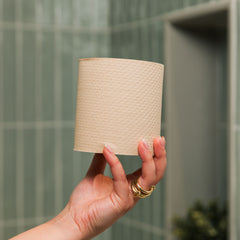
Three things separate a genuinely lower-toxin roll from a conventional one. The first is bleaching. Turning pulp bright white uses chlorine-based processing, and an unbleached roll skips that step entirely, keeping its natural beige colour. The second is additives: fragrance and dye offer no hygienic benefit and are common irritants, so fragrance-free and dye-free are worth looking for. The third is what the paper is made from and how it is processed, since some conventional papers have been found to carry trace industrial chemicals.
That last point is where PFAS come up. PFAS, sometimes called forever chemicals because they persist in the environment and the body, have been detected in some toilet paper. The important nuance is that this is disproportionately associated with the manufacturing process rather than with any particular raw material.
If you want to understand where these chemicals turn up, the National Institute of Environmental Health Sciences' overview of PFAS and where they turn up in everyday products is a useful primer. For a roll that clears all three checks, we make our plant paper-based toilet paper from FSC-certified organic bamboo, leave it unbleached, and keep it free from added dyes and fragrance.
How to Add a Low Toxin Lifestyle Toilet Paper to Your Routine
The reason many low-toxin efforts stall is that people try to change everything at once. A steadier approach is to swap items as you run out, starting with the ones you use most.
• Start with what you touch most. High-frequency, skin-contact products like toilet paper give you the most consistent change for the least effort, which makes them a sensible first swap.
• Read the label, not the front of the pack. Look for a stated unbleached label or bleaching method, an explicit fragrance-free and dye-free note, and a named certification such as FSC. Vague terms like "natural" are not regulated.
• Check the packaging too. Plastic-free wrapping in recycled or compostable paper, printed with vegetable-based inks rather than petroleum-based ones, keeps the swap consistent with the rest of a lower-waste routine.
• Build outward gradually. Once the bathroom staples are handled, the same label-reading habit carries over to tissues, cleaning products, and beyond.
Better for You. Better for the Planet.
Organic bamboo toilet paper designed to be gentle on your skin and kind to the earth.
- ✔ No Bleach, Toxins, or PFAS
- ✔ Naturally Hypoallergenic & Fragrance-Free
- ✔ Sustainable Everyday Comfort

An Easy First Swap for a Lower-Toxin Home
If you are building a lower-toxin routine and want a simple place to start, we make our plant paper-based toilet paper from FSC-certified organic bamboo, without bleach or unnecessary whitening brighteners, and keep it free from added dyes and fragrance. It arrives in plastic-free packaging, so it fits a lower-waste routine as well as a lower-chemical one, and it suits both eco-minded households and anyone rethinking daily exposures. You can see how it sits alongside the wider plant-based, plastic-free hygiene range we make.


